History
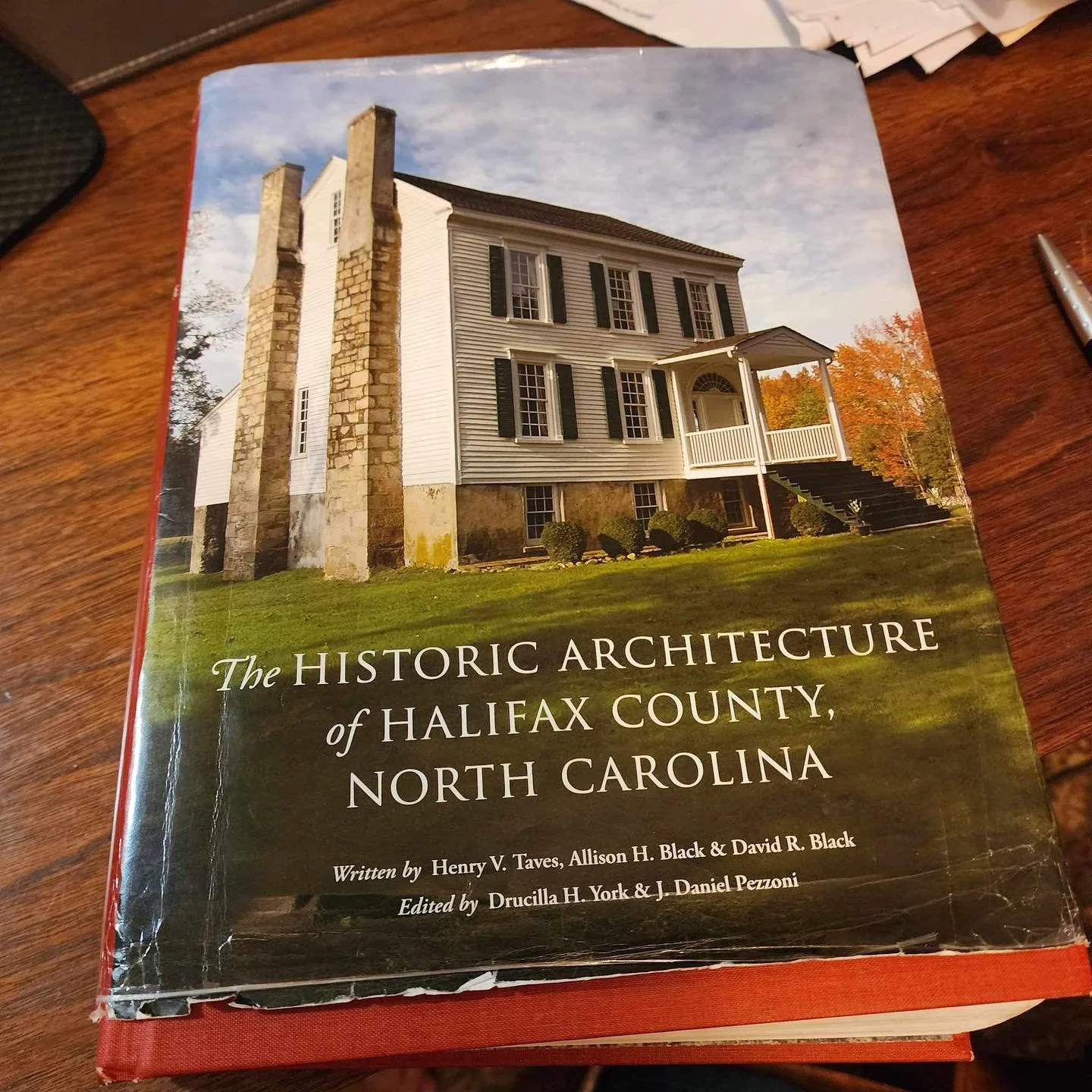
The John Brown House, located at 23 East Pittsylvania Street in Halifax, is a remarkable example of the town’s layered architectural and personal history. Documented in The Historic Architecture of Halifax County, North Carolina, the home reflects both the evolution of Halifax itself and the lives of the people who helped shape it.
A House with a Complicated Past
Architecturally, the home is a fascinating blend of Federal and Italianate styles, a combination that hints at multiple periods of construction and remodeling. While the house’s earliest origins — and even its original location — remain unknown, historical evidence suggests it was moved to its present site in the late nineteenth century, likely in connection with changes to nearby railroad lines.
By the 1870s, the house became associated with two prominent local merchants, John N. Brown and H. J. Carraway, who purchased the lot on which the home now stands. By 1888, John Brown and his family were residing in the house, firmly establishing it as a key residence in Halifax.
Architectural Details That Tell a Story
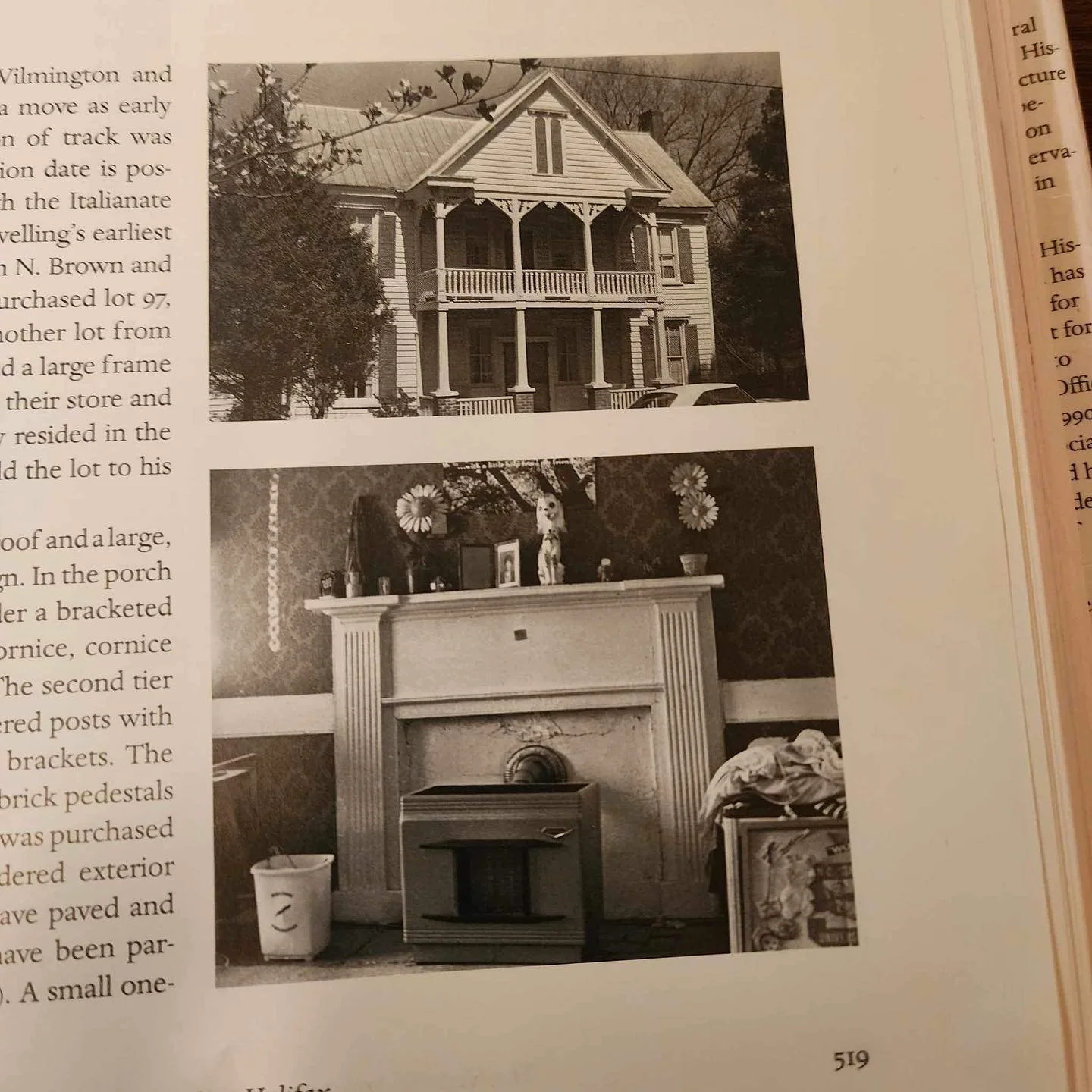
The exterior features that define the home today include a metal-sheathed gable roof, distinctive double-shouldered brick chimneys, and an impressive two-tier Italianate portico. Decorative brackets, paired arched vents, and finely detailed cornices speak to late-nineteenth-century craftsmanship.
Inside, much of the home retains its Federal-style character, including original mantels, paneled doors, and decorative woodwork. Period photographs included in the book reveal the elegance of the interior spaces, particularly the mantels adorned with classic Federal motifs such as sunbursts, recessed panels, and refined pilasters.
John Nicholas Brown & Elizabeth James Simmons
The heart of the home’s story belongs to its original owners, John Nicholas Brown and his wife Elizabeth James Simmons.
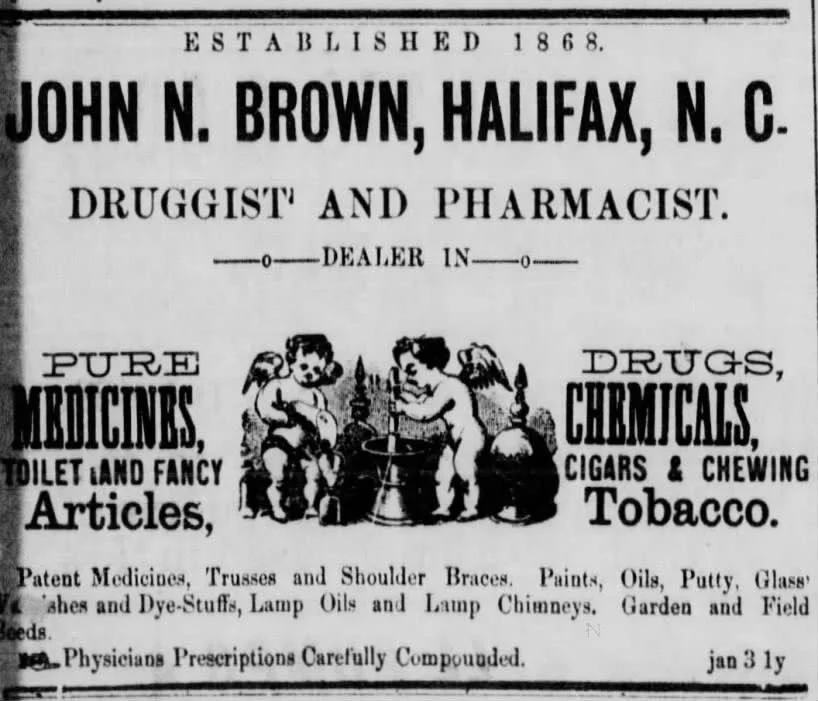
John N. Brown was a respected Druggist and Pharmacist in Halifax. Newspaper advertisements from the era show that his business offered pure medicines, chemicals, paints, oils, and household goods, with prescriptions carefully compounded — a vital service in a growing town.
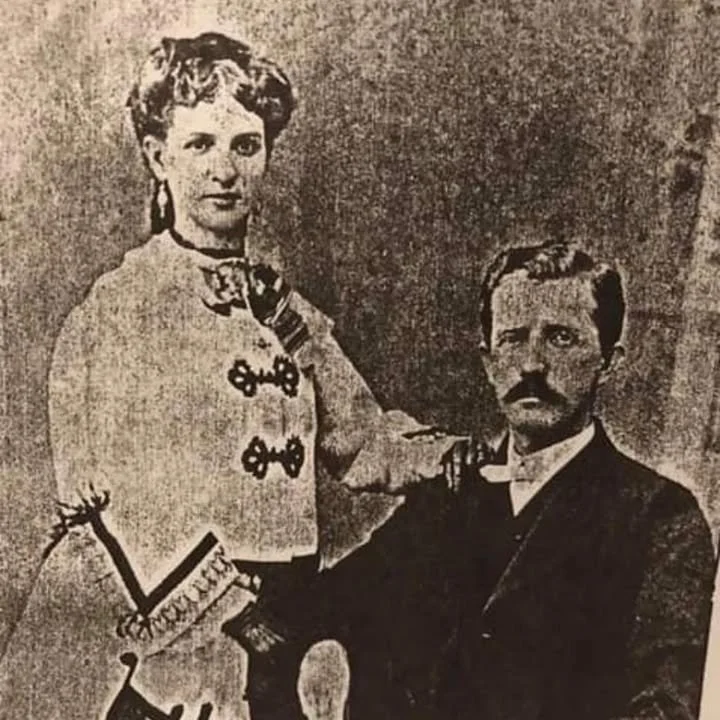
John and Elizabeth were married by J. M. Grizzard, and their partnership extended beyond marriage into the life of the community. Historic photographs believed to depict the couple offer a rare, personal glimpse into the people who once walked the halls of the home.
In a poignant and meaningful detail, John and Elizabeth Brown are buried in the cemetery directly across the street from the house, forever keeping watch over the property they once called home.
A Living Piece of Halifax History
Over time, the house has also been known as the Price House, named for a mid-twentieth-century owner. Yet through every change, the character and spirit of the home have endured.
Today, the John Brown House stands as a living piece of Halifax history — a place where architecture, community, and personal legacy intersect. Whether you are staying overnight or simply learning its story, the house invites you to step back in time and experience the enduring legacy of those who came before.